If you've noticed bubbling or blistering on your pool surface, you may need pool osmosis treatment Brisbane homeowners and specialists trust. Osmosis in fibreglass pools occurs when water penetrates the surface layer and becomes trapped, creating pressure that forms small blisters beneath the coating. Think of it like a bubble forming under wallpaper when moisture gets behind it — visible, uncomfortable, and something that spreads if left alone. At Brisbane Fibreglass Pools, we provide practical osmosis repair solutions to treat these surface problems and restore your pool's appearance.
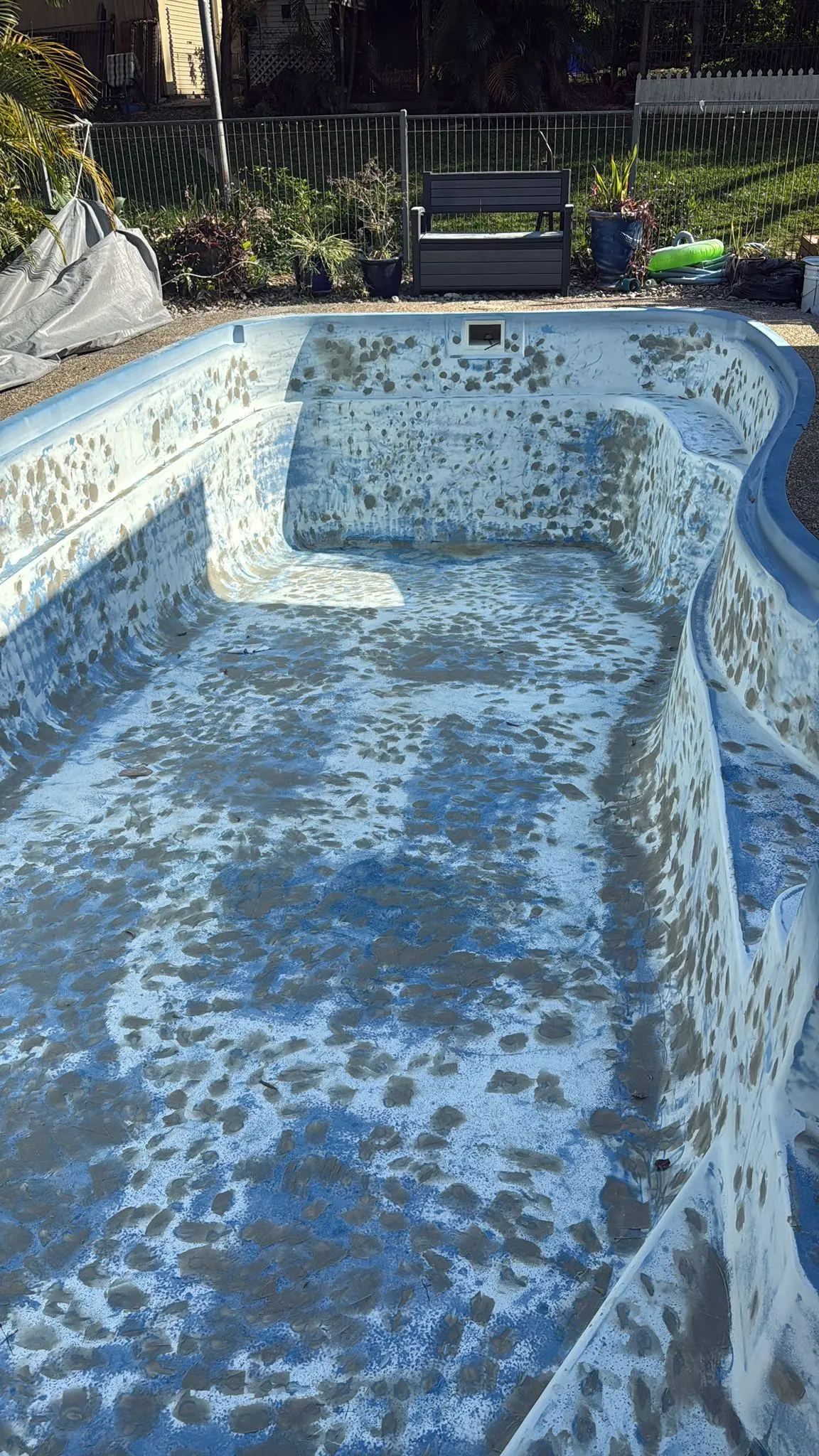
Osmosis in a fibreglass pool happens when water molecules pass through the outer gel coat and become trapped within the fibreglass layers beneath. As this moisture builds up, pressure forms and pushes outward — creating the characteristic blisters or bubbles you can see and feel on the pool surface.
It's a natural process that can affect fibreglass pools of any age, though it's more common in older pools or those that have experienced chemical imbalances. The good news is that it's a well-understood issue with a clear treatment process.
You may have osmosis if you notice any of the following:
If you're unsure whether what you're seeing is osmosis or another type of surface damage, we're happy to take a look and give you an honest assessment.
We begin by draining the pool and allowing the surface to dry thoroughly — a critical step, as moisture must be removed before any repair work can be effective.
Affected areas are then ground back to expose and remove the blistered material. We repair the exposed sections using fibreglass repair compounds, rebuild the surface profile, and then refinish to restore a smooth, consistent appearance across the pool.
The goal is a pool surface that looks clean and feels comfortable — with the moisture pathway that caused the problem properly addressed.
The cost of osmosis treatment depends on how widespread the blistering is and how much surface preparation is required. A pool with minor isolated blistering costs significantly less to treat than one where the majority of the floor surface is affected.
All work at Brisbane Fibreglass Pools is capped at $3,300 per contract in line with Queensland regulations. We assess your pool honestly before quoting and won't recommend more work than is actually needed.
No, osmosis is a cosmetic issue and doesn't make the pool unsafe to swim in. However, if left untreated it can spread and become more expensive to repair over time.
Water penetrates the outer gel coat layer over time and becomes trapped within the fibreglass laminate. Chemical imbalances, age, and manufacturing variations can all contribute.
Most can be treated effectively. Very widespread or deep osmosis may require more extensive resurfacing work, which we'll discuss honestly with you during the assessment.
Depending on severity, treatment typically takes 3–10 business days including surface preparation, repair, and finishing.
Proper treatment significantly reduces the likelihood of recurrence. Keeping your pool water chemistry balanced is the most important factor in preventing it from returning.
Yes. The pool must be fully drained and the surface dried before osmosis treatment can begin.
Don't wait — osmosis spreads over time and becomes more expensive to fix. Brisbane Fibreglass Pools provides expert pool osmosis treatment across Brisbane, Gold Coast, and Sunshine Coast.